

Rethinking Migration and Development: Insights from Inaugural Immigration Symposium at Georgetown
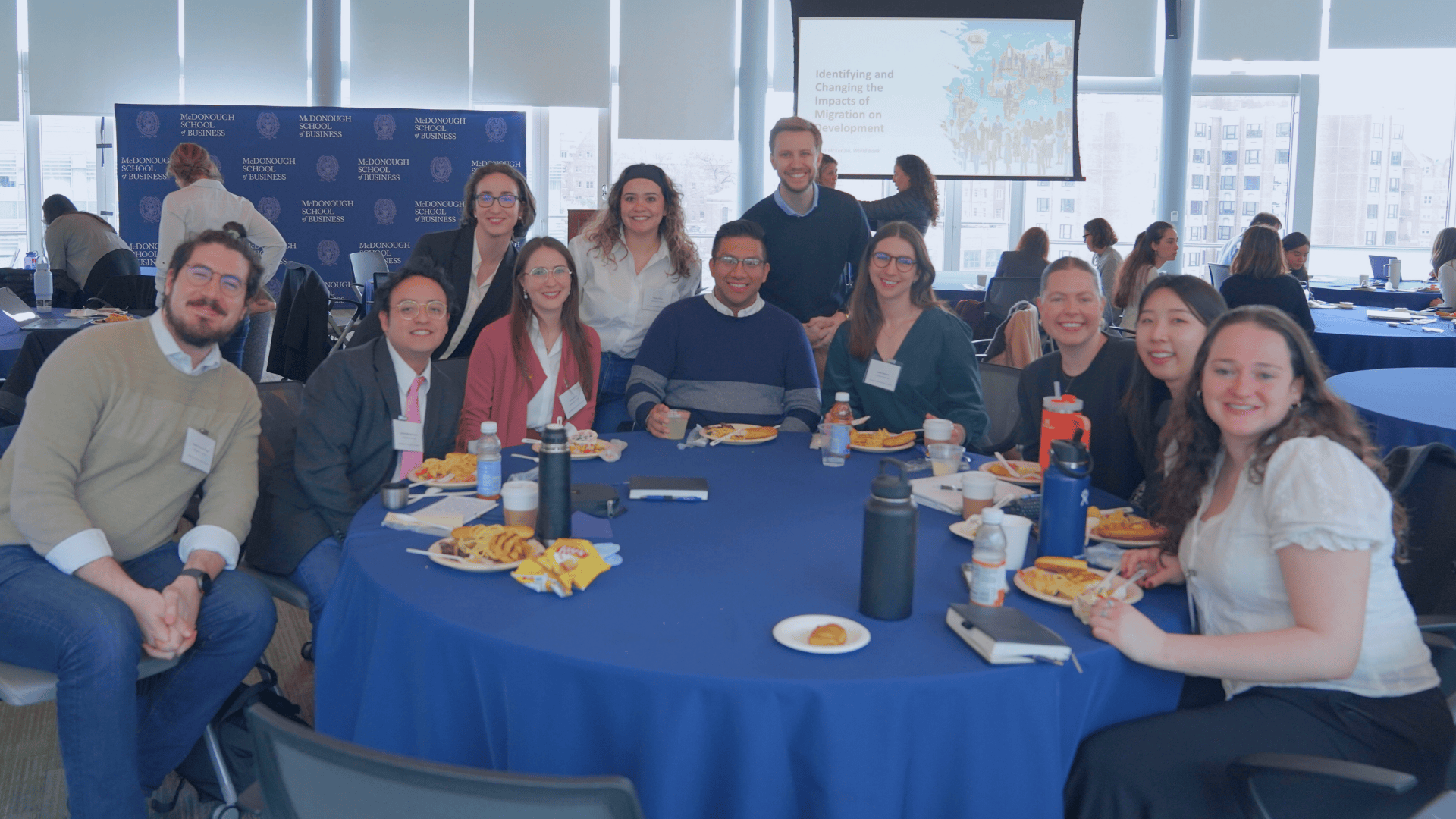
The Georgetown Center for Business and Public Policy recently co-hosted the 2026 Washington Area Immigration Symposium, a high-level gathering of scholars and practitioners focused on the empirical realities of global migration. The symposium provided a critical platform for evaluating how migration shapes economic development during a period of significant global volatility.
Complexity Over Simplicity in Migration Impacts
The event was headlined by a keynote address from David McKenzie, lead economist at the World Bank. McKenzie challenged the traditional academic search for a single, universal “impact” of migration. Instead, he introduced a framework highlighting that migration outcomes are fundamentally heterogeneous.
According to McKenzie, the developmental impact of migration depends on three key variables:
- Individual Characteristics: Factors such as professional skills (e.g., computer scientists vs. lawyers) and the specific nature of the move (e.g., permanent vs. temporary) drastically change the economic returns for the migrant and their home country.
- The State of the World: Economic outcomes for host communities and families left behind often depend on whether migration occurs during a recession or a boom.
- Policy Choices: Strategic decisions regarding who can migrate and their legal right to work upon arrival determine the ultimate fiscal and social impact on development.
McKenzie noted that while “market-driven” migration — which fills specific labor shortages — often has neutral or positive wage effects, supply-driven “surges” caused by crises abroad present entirely different integration challenges.
A Roadmap for Future Research
A central theme of the address was the need for academic humility. McKenzie warned that current research methods often identify the impacts of rare, sudden shocks rather than “normal” migration flows. He urged the research community to focus more on evaluating specific policy experiments — such as seasonal worker programs or migration insurance — to better facilitate the global flow of talent.
The symposium’s broader agenda complemented this call for nuance, featuring sessions on the technicalities of “Measuring the 2020s Immigration Surge and Decline,” the complexities of “Black Immigrants’ Socioeconomic Integration in the United States,” and the human trajectories of moving “From Return to Reintegration.”
Together, these discussions underscored the Center for Business and Public Policy’s commitment to advancing a more sophisticated understanding of the intersection between policy, business, and human mobility.